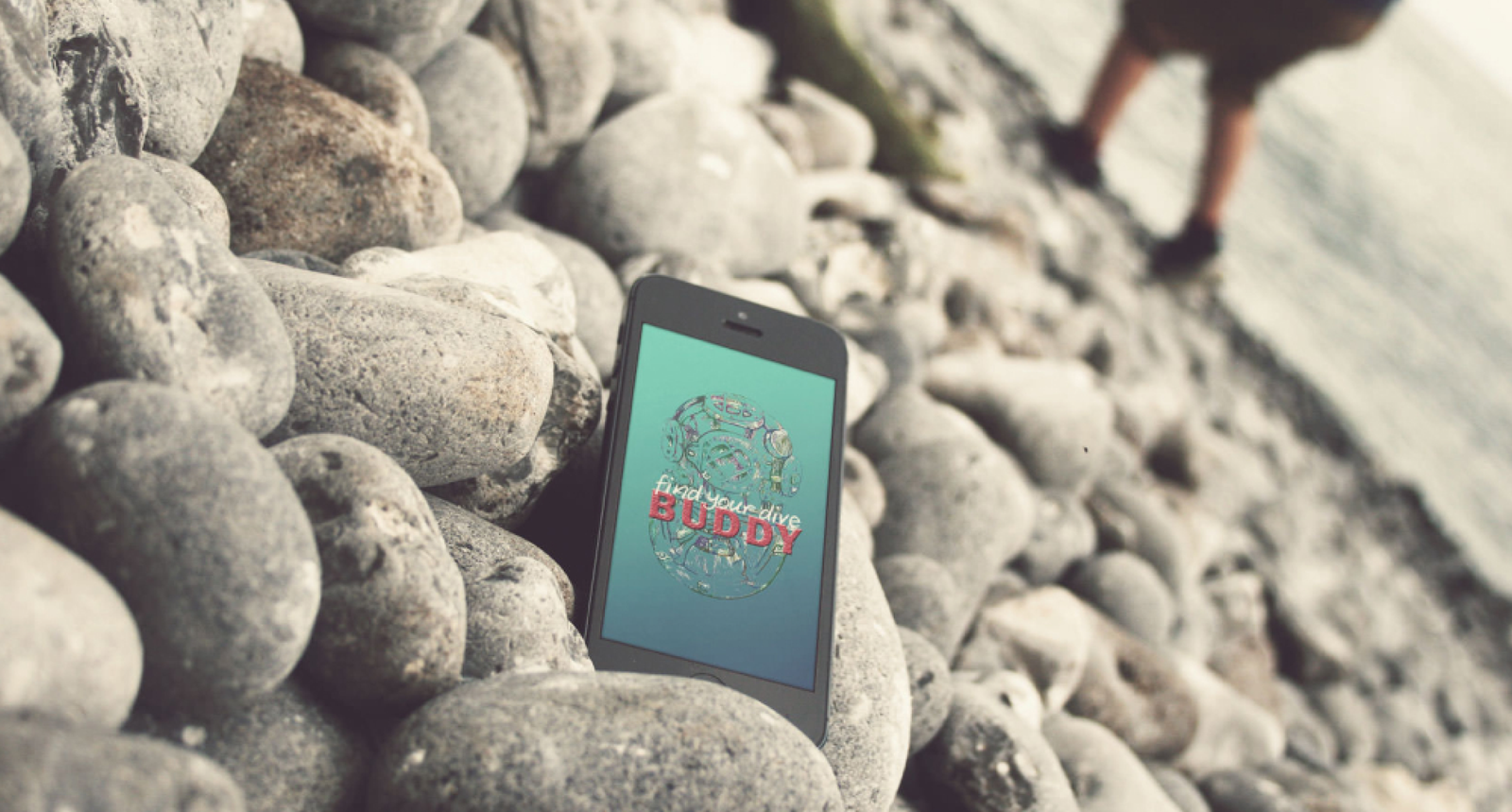
Find Your Dive Buddy
• MSc UX Design Project •
Mobile app connecting diving partners
Overview
This project grew from a problem I knew personally. As a scuba diver — and as a woman — finding a reliable dive buddy is one of the most persistent friction points in diving. It's not just about finding someone available on the same day. It's about finding someone whose experience level, dive style, and values align with yours. Someone you can genuinely trust underwater.
Developed as part of my masters degree, this was a project I was genuinely invested in — not just academically, but personally. The design challenge was to create a mobile application that would help divers connect with compatible partners based on experience, location, certifications, and shared diving philosophy.
The Challenge
The existing routes for finding dive buddies — dive centres, Facebook groups, forums — are unstructured and offer almost no way to assess compatibility before you're underwater with someone. For many divers, this creates anxiety rather than confidence. For women divers especially, it raises real safety concerns.
"Finding a dive buddy isn't just a logistics problem. It's a safety problem, a social problem, and — for many women — a trust problem."
Key Pain Points
- No centralised platform for finding dive buddies outside of dive centres or informal social groups
- No structured way to assess a potential buddy's experience, certification, or dive style
- Limited control over how and when to initiate contact with a stranger
- Women divers facing additional safety considerations with no tools designed to address them
- Trust and compatibility treated as afterthoughts rather than core to the experience
Research Process
I conducted research within the scuba diving community through online surveys and an analysis of existing literature on diver behaviour and buddy selection. I spoke with divers across different experience levels and contexts — recreational and technical, solo travellers and club members.
The research revealed something important: trust, compatibility, and shared diving philosophy mattered just as much as logistics like location and certification level. Divers weren't just looking for availability — they were looking for alignment.
KEY INSIGHTS
Survey responses surfaced patterns around trust signals, communication preferences, and the importance of shared dive goals — photography dives, deep dives, reef exploration. Divers wanted to know who someone was as a diver, not just what certification they held.
User Needs
Users consistently prioritised safety, transparency, and control. They wanted to initiate contact on their own terms, browse profiles without pressure, and understand a potential buddy's history and philosophy before reaching out.
These insights directly shaped the profile architecture, the matching criteria, and the contact flow — ensuring the diver remained in control at every stage.
The Design Process
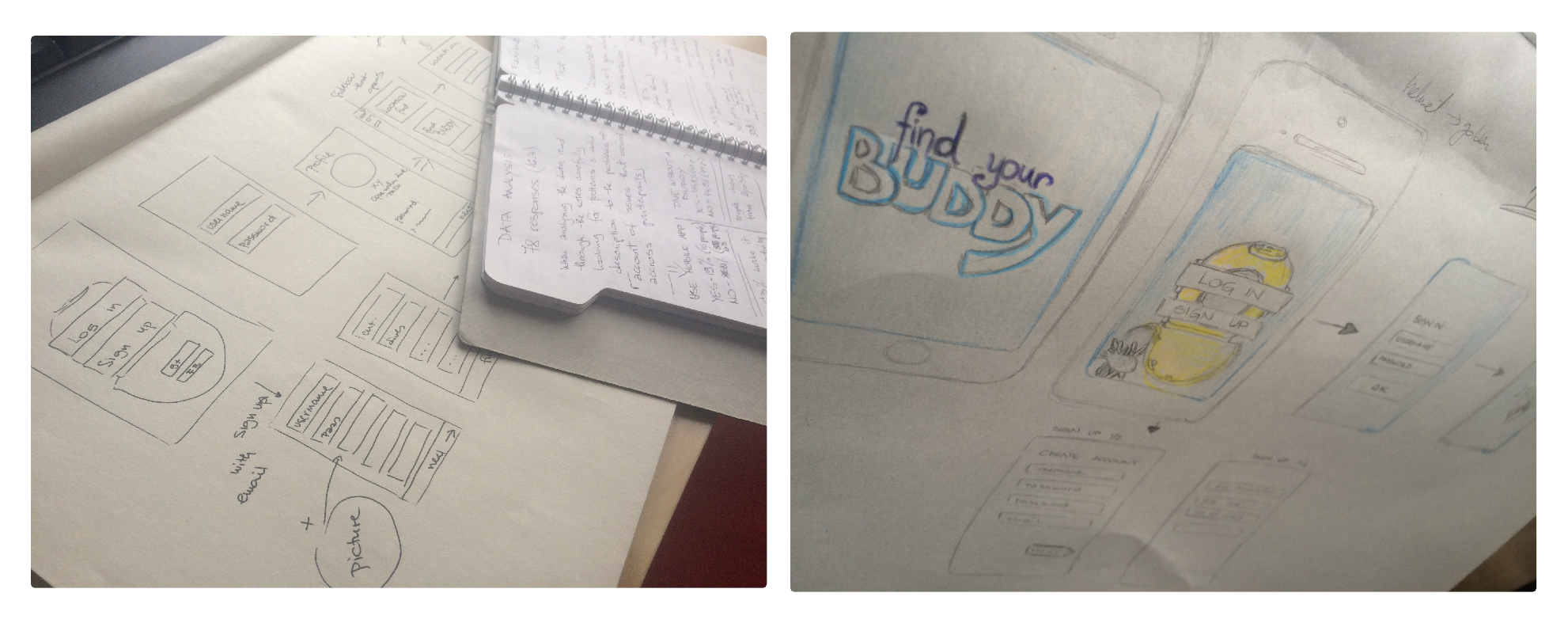
Sketching & Flow Mapping
Hand-drawn exploration of onboarding, profile browsing, matching, and contact flows — kept loose to avoid early attachment to specific solutions.
Wireframing & Early Testing
Low-fidelity wireframes tested with real divers to validate assumptions around profile hierarchy and how users expected to initiate contact.
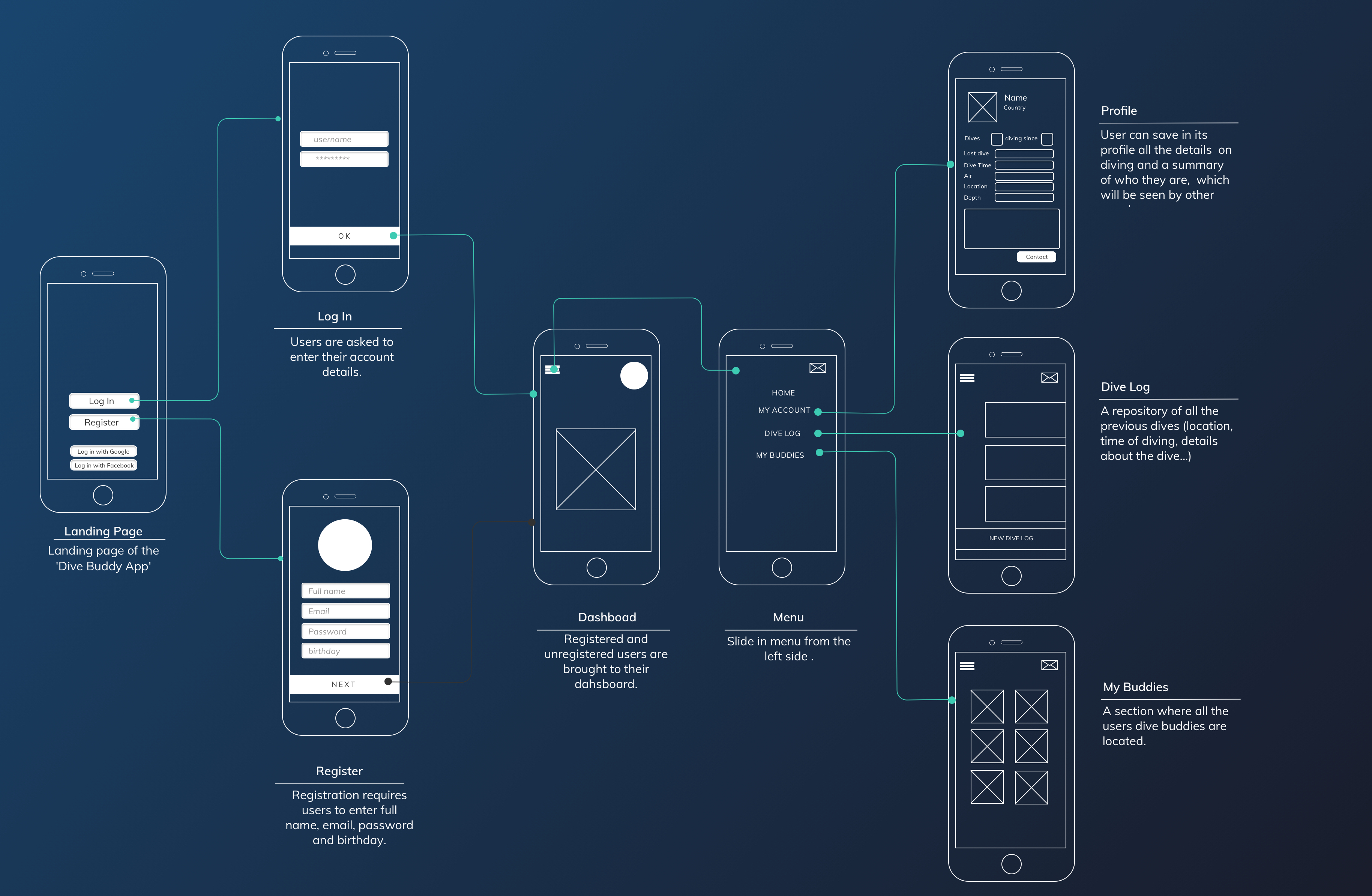
App flow — full user journey mapped across all key screens
High-Fidelity Design
A full visual design system developed with the underwater context in mind — clarity, calm, and trust embedded in every component and colour decision.
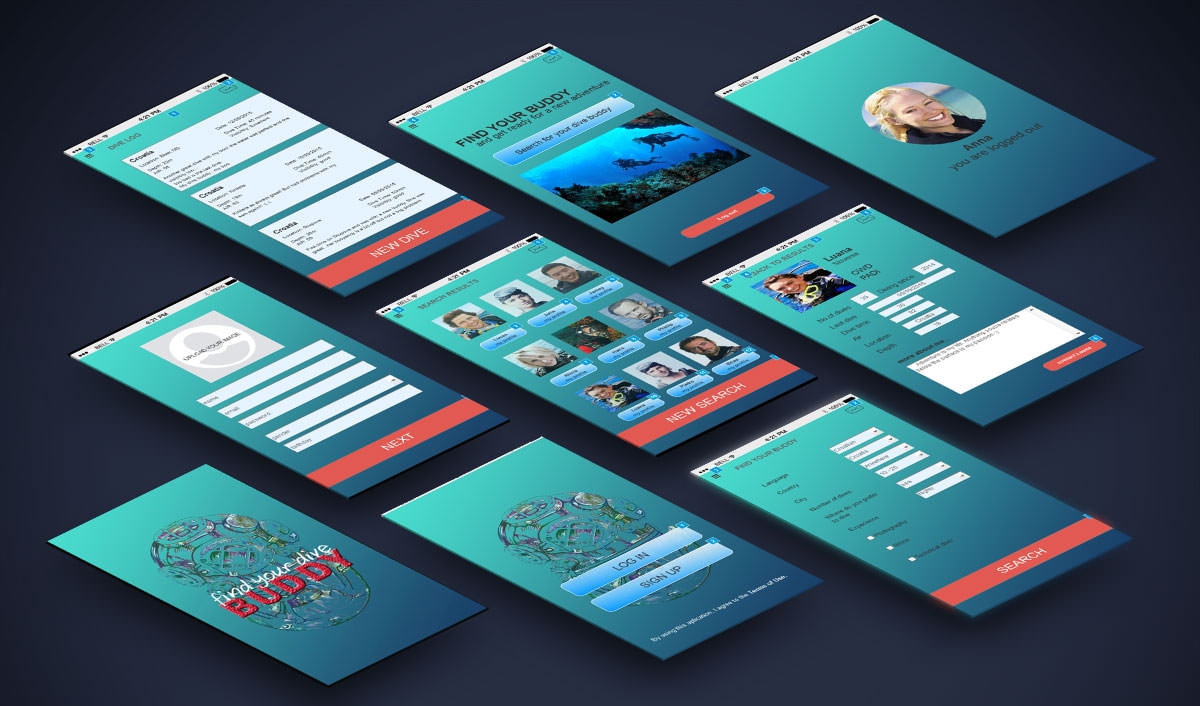
High-fidelity screens — landing, search, buddy profiles, dive log, and filter views
Interactive Prototype in Axure RP
A fully interactive prototype covering profiles, search, filtering, matching, and messaging — built for realistic usability evaluation with actual divers.
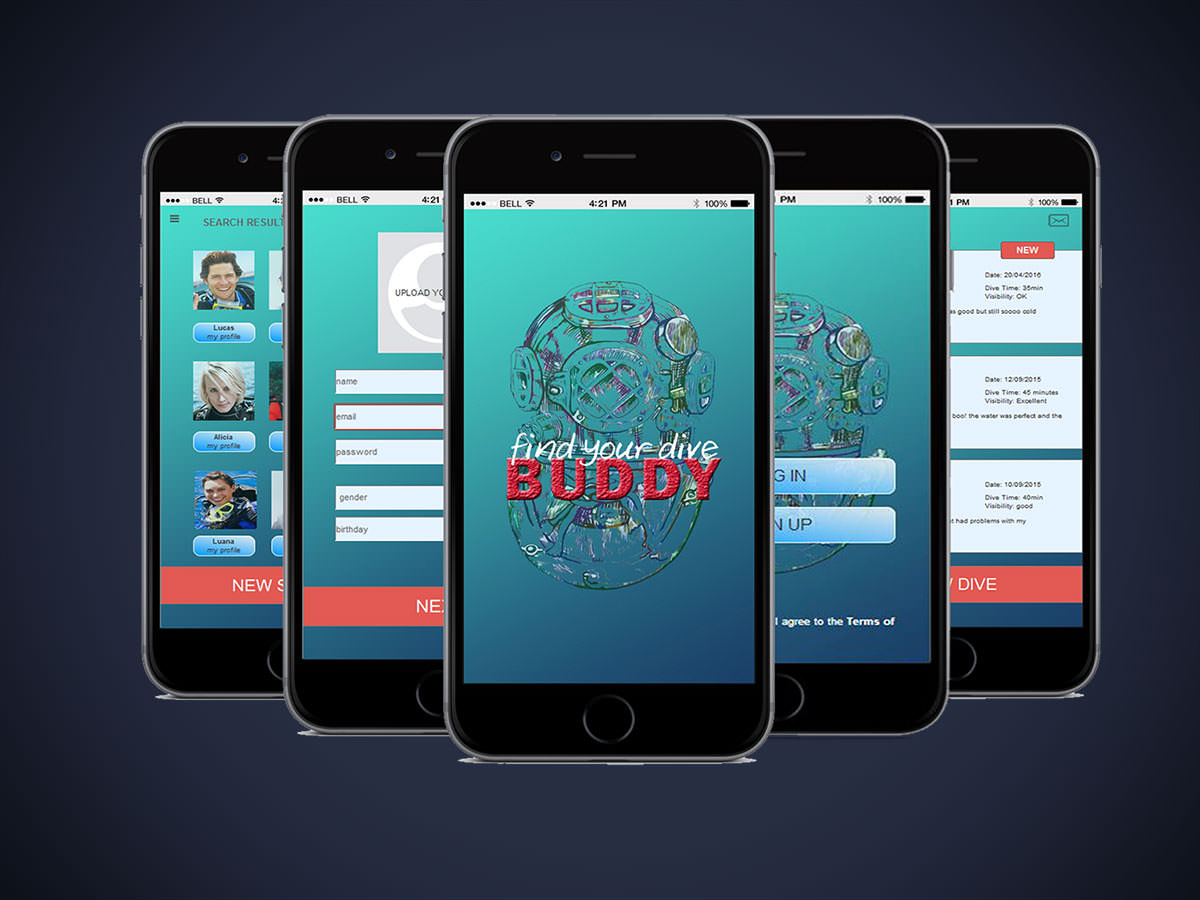
Interactive prototype — core screens across the full user journey
The final prototype included complete diver profiles — diving history, certifications, preferred locations, and personal preferences — giving users the information they needed to make confident decisions about potential dive partners.
Implementation & Outcome
The interactive prototype demonstrated that thoughtful, research-grounded design could meaningfully address a gap the diving community had been navigating informally for years. Every design decision traced directly back to a real insight — not assumption.
Validated a genuine community need — no dedicated tool existed; the problem was widespread and underserved
Trust-first profile architecture— surfaces the signals that actually matter to divers, not just credentials
Diver-controlled contact flow — users initiate on their own terms, reducing anxiety around approaching strangers
Research-informed at every decision point — from information hierarchy to onboarding to notification preferences
Reflection
This project was born from a frustration I felt long before I opened a sketchbook. As a diver, finding a compatible buddy — especially as a woman — is genuinely difficult in a way that's hard to explain to non-divers. You're not just vetting someone's qualifications. You're deciding whether you trust them in an environment where communication is limited and conditions can change fast.
When I started asking other divers about this, the response was immediate. Survey after survey confirmed what I'd felt but hadn't fully named: it's not about proximity or certification level alone. It's about shared philosophy, communication style, and that quiet confidence that comes from feeling seen as a diver — not just a body to fill a buddy slot.
The best design problems find you.That closeness to the problem made me a better researcher and a more honest critic of my own assumptions. Testing wireframes with real divers early on saved me from building solutions that only worked for my version of the problem — a lesson I carry into every project since.